Vicariates will host presentations from clinical psychologist Johann D’Souza on screen time, best practices for parents
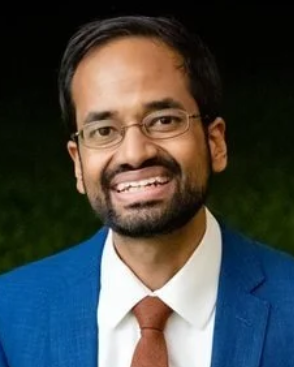
Imagine your teenager driving without GPS. Driving without it was the norm 15 years ago, but now we’re dependent on it, Johann D’Souza said.
Now step back and think about the use of screens — smartphones, tablets and computers — and how that dependence has produced detrimental effects on young people, he said.
“When using screens, our attention is passively engaged with little effort on our part,” said D’Souza, a Houston-based clinical psychologist who specializes in anxiety and OCD. “The images on the screens supply the work of the imagination. The ability to instantly look up information replaces the function of our memory. The impulse to satisfy every curiosity weakens our self-control.”
D’Souza will visit St. Louis in February for several presentations on screen time and its effects on mental health and family culture. Sponsored by the archdiocesan Offices of Evangelization and Discipleship and Marriage & Family Life, and the three vicariates, the presentations will offer statistics on the impact of screen time among children and teens, as well as best practices for healthy screen and smartphone use.
A Pew Research Center survey in October 2025 detailed widespread technology use among kids ages 12 and younger — and the day-to-day reality of managing screen time as a parent. About 42% of parents said they could be doing better at managing their child’s screen time. But a larger share (58%) said they’re doing the best they can.
Nine-in-ten parents of children ages 12 and younger say their child watches TV, 68% say they use a tablet and 61% say they use a smartphone. Half say their child uses gaming devices, and about four-in-ten say they use desktops or laptops. Roughly six-in-ten parents of an 11- or 12-year-old say their child has their own smartphone.
In his practice, D’Souza sees an overwhelming number of young clients with anxiety. But by far, the greatest threat is pornography addiction, he said. “Pornography perverts one of the greatest human goods, which is children and teens find it extremely difficult to turn away from it once exposed,” he said.
Screen time lends itself to passive engagement with little effort on the part of the user, D’Souza said. “With regular use, the device becomes a kind of second soul, an external embodiment of our own life force without our even being aware of it.”
From the age of 2 to 15, the brain undergoes a massive elimination of unused synaptic connections, which form the basis of our nervous system function, D’Souza said. Whatever skills are practiced during this critical period are strengthened. Those that are not practiced are wasted and largely disappear, he said.
“If a child is on screens eight hours a day, as the average teen in this country is, that’s eight hours he’s not practicing the life skills that are so important for his long-term well-being,” D’Souza said.
He recommended that parents implement small changes in their child’s screen time, starting by setting aside an hour a day without using a smartphone or other device. Increase that to checking the device only once on Sundays. Then try a three-day screen fast. Increase that to a two-week screen fast and observe the results. The long-term goal, he said, is to completely eliminate screen use where possible.
“God has entrusted you to be the primary educators of your children,” he said. “Let’s bring out the best in our children and raise a generation of saints who are physically strong, intellectually sharp and morally upright, who can plant the cross of Christ firmly in the center of the world and be a beacon of light and hope to their friends and family.”
“Screentime, Science and the Sacred”
Johann D’Souza will speak on “Screentime, Science and the Sacred,” a presentation for parents and educators on screen time, mental health and healthy family culture. D’Souza will discuss how screens impact brain development and give practical strategies to help families find balance and strengthen relationships in a digital world. Dates and locations include:
Immaculate Conception in Dardenne Prairie, 6:30-8:30 p.m. Thursday, Feb. 19
Cardinal Rigali Center in Shrewsbury, 9-11:30 a.m. Friday, Feb. 20
Our Lady Queen of Peace in House Springs, 9-11:30 a.m. Saturday, Feb. 21
Cardinal Rigali Center , 1:30-4 p.m. Saturday, Feb. 21
Register at stlreview.com/4t5SMwk
Maintaining digital wellness
1. Not all screen time is created equal. While there is plenty of inappropriate media, there is also content that can help us learn and grow, such as educational videos and other media that are intellectually and spiritually fulfilling.
2. Implement a family “digital sunset.” In the evening, when everything gets turned off, families can wind down and be present with each other. It’s a healthy boundary and can even help with sleep.
3. Use critical thinking: Why do these apps and websites exist? Do they exist to entertain, inform or educate? If you’re using an app or website for free, you are the product being sold. None of this is a public service. We live in an attention economy now — nothing is more valuable than our attention.
4. Ask these media literacy questions: Who’s the sender? What’s their motive? How is the message designed? What information is left out? Who makes money from this? Being alive in 2026 means being in the digital world. We need to understand how we use digital media, but more importantly, how digital media uses us.
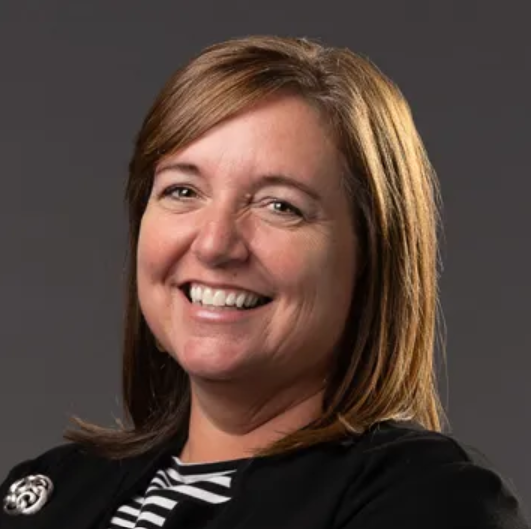
Julie Smith, expert on media literacy and faculty member at Webster University in St. Louis.