What does prudential judgment mean in Catholic moral teaching? How does it apply to a situation like immigration policy?
The Catholic teaching about prudential judgment comes from the recognition of the great complexity of the moral life. There are so many different possibilities and situations for moral questions that no system of rules could ever cover every single possible decision. Unforeseen consequences, imperceptible influences, slight differences in context — along with other variables — make it impossible to make absolute or abstract pronouncements in such cases.
How then can a person be reasonably assured of doing the right thing in such a circumstance? The answer of the Church is that the person must use “prudential judgment.” The Catechism of the Catholic Church tells us that prudence is the virtue which enables us “to discern our true good in every circumstance and to choose the right means of achieving it” — that is to say, the ability to figure out what is good in a specific situation and to pick the most effective way to accomplish that good.
Does that mean it is up to the individual to figure out what is right or wrong all alone? Hardly! In the moral life, the Church identifies basic principles and boundaries that God (or in the case of natural law, human reason) has revealed that apply to all people in all circumstances. For example, the most important Christian ethical principle is the one taught by Jesus as the “greatest commandment” — love God with all your heart and your neighbor as yourself. For a principle that applies even to nonbelievers, we can look to St. Thomas Aquinas’ axiom “Do good, and avoid evil.” Other basic principles of morality that the Church has described include universal human dignity, the sanctity of life and the option for the poor/vulnerable.
No person can choose to go against these fundamental principles of God’s order in any circumstance. But when applying these principles to concrete situations, it is often unclear what is the best way to enact them. We might think of the challenge to determine the best route to drive to a particular destination. A group of people might all agree on the final destination, but disagree on the best way to get there. One may argue the need to take into account the traffic, while another may want the most scenic route, or another the most direct route.
Prudential judgment is the virtue that helps a person weigh the specifics of a situation and to make a decision how to proceed. This takes patient training through means such as study of relevant Church teachings and Scripture, consideration of expert analysis and, of course, prayerful encounter with God.
As long as the person does not contradict any basic moral principles, the Church defends a legitimate diversity of opinions in such situations. A person’s judgment and conscience may differ from another’s in such concrete circumstances and neither can call the other immoral or a sinner. Of course, they may (indeed should!) advance reasons to convince the other that their insights and judgments are the most accurate and insightful, but they cannot remove the rightful freedom of the other to make an assessment and pursue it.
This prudential judgment is often required to deal with the complex situations that arise in politics. For example, regarding immigration policy, the Church would identify certain basic principles such as human dignity, justice, the common good and the option for the poor as fundamental. Taking one step down from the abstract to the concrete, we might acknowledge that a modern nation has a right and responsibility to manage its borders with justice and compassion. This is still broad enough that it is almost universally acknowledged, but some uncertainty and discretion begin to enter in (for example, in the European Union, the individual nations have given up some of this authority to establish a shared immigration policy). Another step (or more) down the ladder, and questions such as the advisability of immigration quotas, the process for granting citizenship and the practicalities of a guest worker program become even more uncertain and subject to the prudential judgment of those involved. It is notable, however, that some policies can be shown to contradict basic moral principles in unacceptable ways, such as the separation for children from parents, the unlawful detention of those with citizenship/legal status or housing people in inhumane circumstances.
As Catholics, even though we may not have certainty, we are called to enter into such discussions seeking to apply Christian teaching as best we can, inviting others to seek common agreement through polite and clear-thinking discussion.
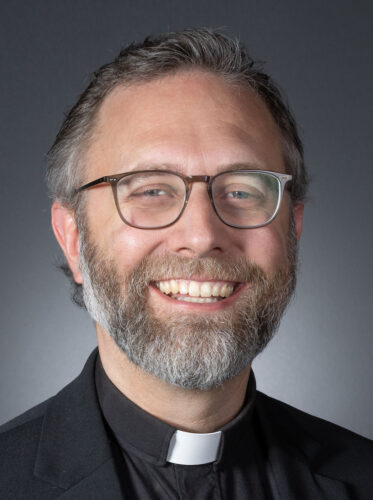
Father Chris Schroeder is parochial administrator of Christ the King Parish in University City and St. Joseph Parish in Clayton.